
PA66 Thermal Insulation Strips: Performance Advantages and Application Guide
Thermal break aluminum window, as a common building door and window material, offer advantages such as thermal insulation, energy efficiency, and aesthetics. The PA66 thermal barrier strips within them are a critical component, providing exceptional thermal insulation performance and application benefits.
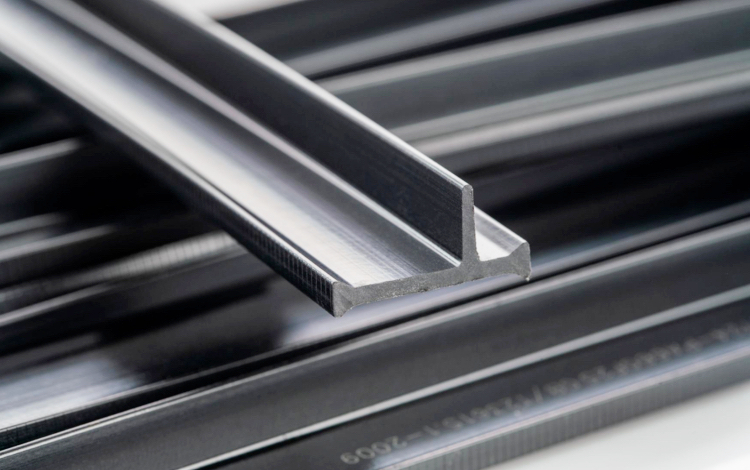
I. Key Features of PA66 Insulation Strips
Excellent thermal insulation performance
Low thermal conductivity (approximately 0.3 W/m·K) effectively blocks heat conduction. This significantly reduces the heat transfer coefficient of doors and windows, improving overall insulation performance. This reduces energy loss caused by temperature differences between indoor and outdoor, resulting in significant energy savings.
Excellent mechanical strength
Glass fiber reinforcement offers a tensile strength exceeding 80 MPa. High flexural strength withstands various stresses in door and window structures. Excellent dimensional stability and resistance to deformation ensures long-term performance.
Excellent weather resistance
High temperature resistance allows for long-term use in environments ranging from -40°C to 120°C. High UV resistance prevents aging and brittleness. Chemical resistance allows for adaptability to various climate conditions.
Environmentally friendly and safe
Contains no halogens or other hazardous substances and complies with RoHS standards. Low smoke and non-toxicity during combustion ensures high safety. Recyclable, aligning with sustainable development principles.
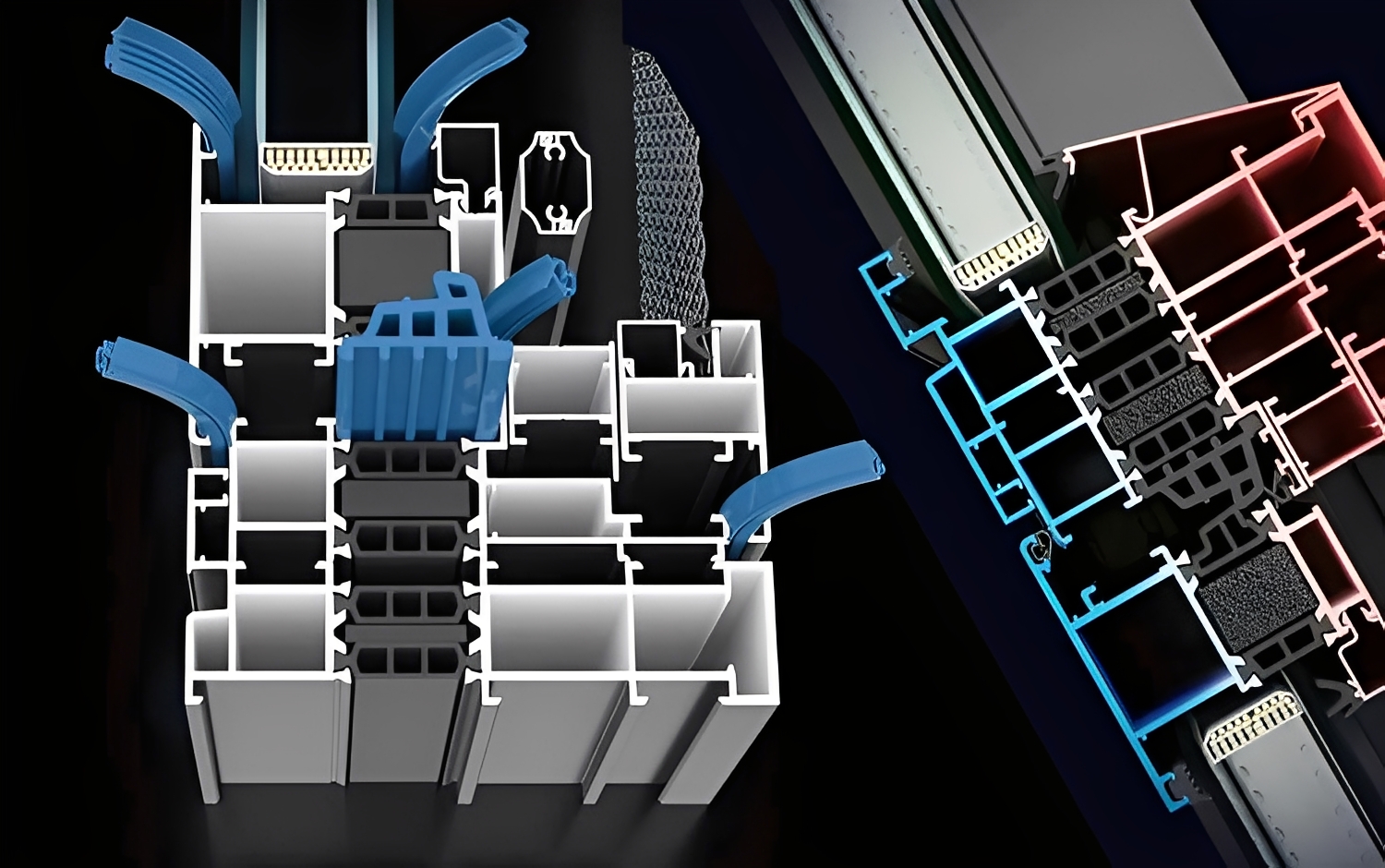
II. Advantages of PA66 Thermal Insulation Strips in Thermally Insulated Aluminum Doors and Windows
1. Improved Thermal Insulation: PA66 thermal insulation strips fill the thermal insulation cavity of thermally insulated aluminum profiles, effectively isolating indoor and outdoor heat conduction, enhancing the thermal insulation performance of doors and windows and improving the building's energy efficiency.
2. Anti-penetration and Waterproofing: PA66 thermal insulation strips resist moisture penetration while narrowing the gap between door and window frames and glass, improving the sealing performance of doors and windows and achieving effective waterproofing.
3. Reduced Condensation: PA66 thermal insulation strips effectively isolate hot and cold air from indoor and outdoor air, reducing temperature differences on the surface of doors and windows, minimizing condensation and dew formation, and maintaining a dry interior.
4. Reduced Noise Conduction: PA66 thermal insulation strips offer a certain soundproofing effect, effectively reducing noise transmission and providing a quieter indoor environment.
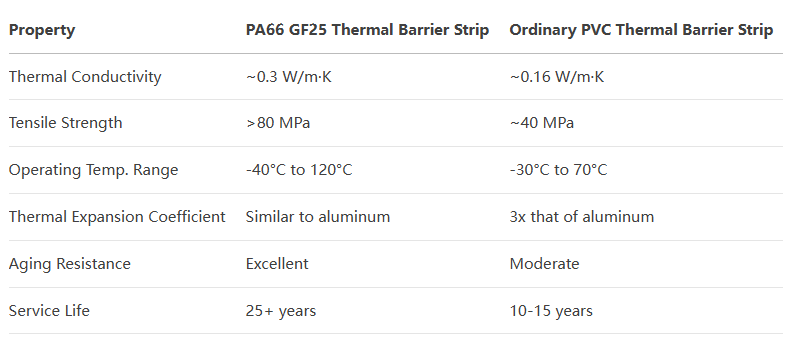
III. Comparison of PA66 Thermal Insulation Strips with Ordinary PVC Thermal Insulation Strips
IV. Choosing PA66 Insulation Strips
When purchasing insulation strips, pay attention to the details on the strip, such as the text and numbers on the strip—brand logo + PA66GF25 (material). PA66 refers to the strip's primary material, polyamide 66 (commonly known as nylon 66 or PA66), while GF25 refers to the strip's inclusion of 25% glass fiber (GF) reinforcement. Generally speaking, strips with 25% glass fiber have greater toughness and strength, with a tensile strength exceeding 80 MPa.
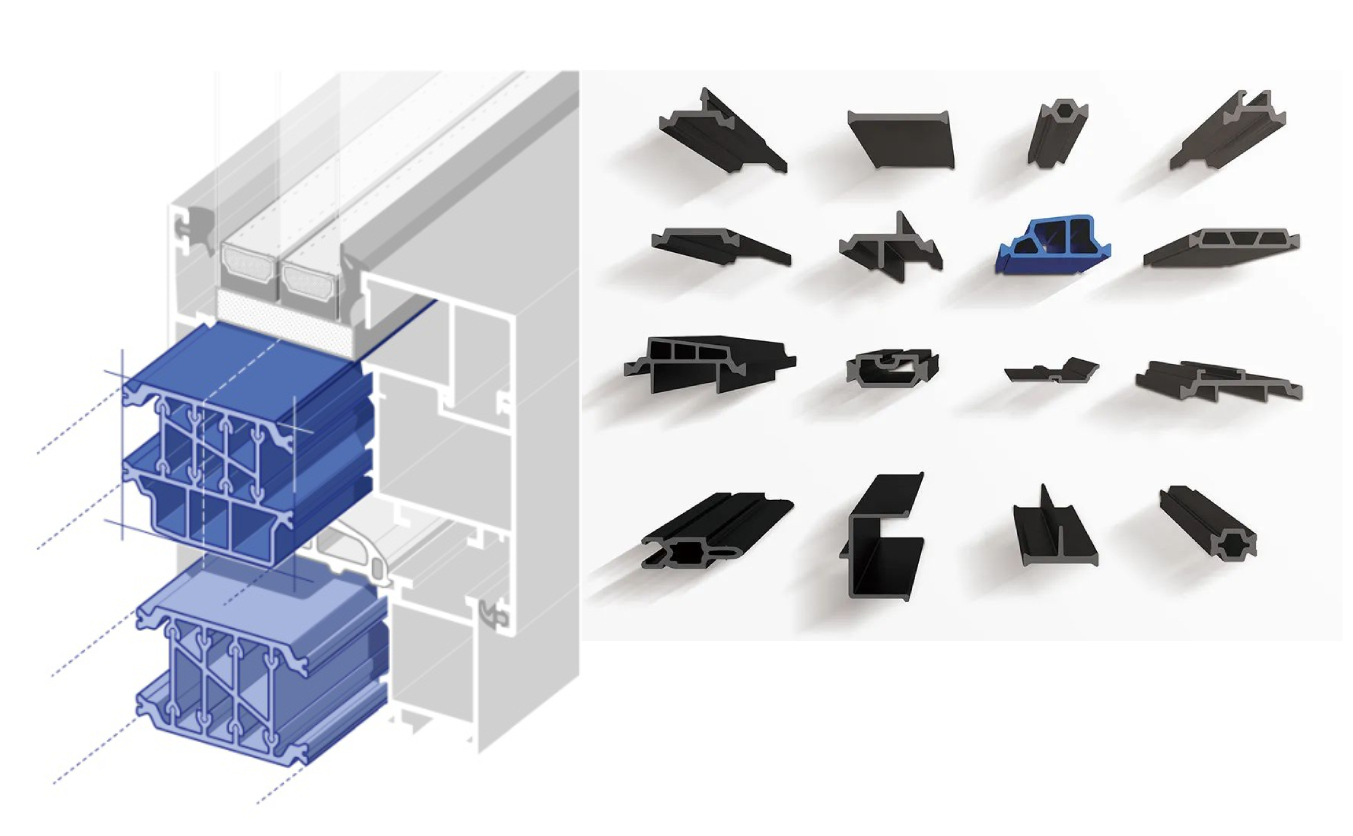
Also, consider the shape of the insulation strips used in door and window profiles. These strips are generally categorized as I-shaped, C-shaped, T-shaped, and multi-cavity.
I-shaped: This is an early type of insulation strip; the strip's shape roughly resembles the capital letter I and is generally shorter (as shown in the image above). C-shaped: An upgraded version of the I-shaped strip. C-shaped insulation strips have a longer heat conduction path than I-shaped strips, resulting in lower heat transfer efficiency and, therefore, better insulation.
T-shaped: This is a C-shaped strip with a small tail. This tail allows for better overlap between the central strip and the insulation material, improving overall insulation performance.
Multi-cavity: Multi-cavity insulation strips are a recent evolution. These strips feature a more complex shape and internal cavities, significantly improving overall window energy efficiency.